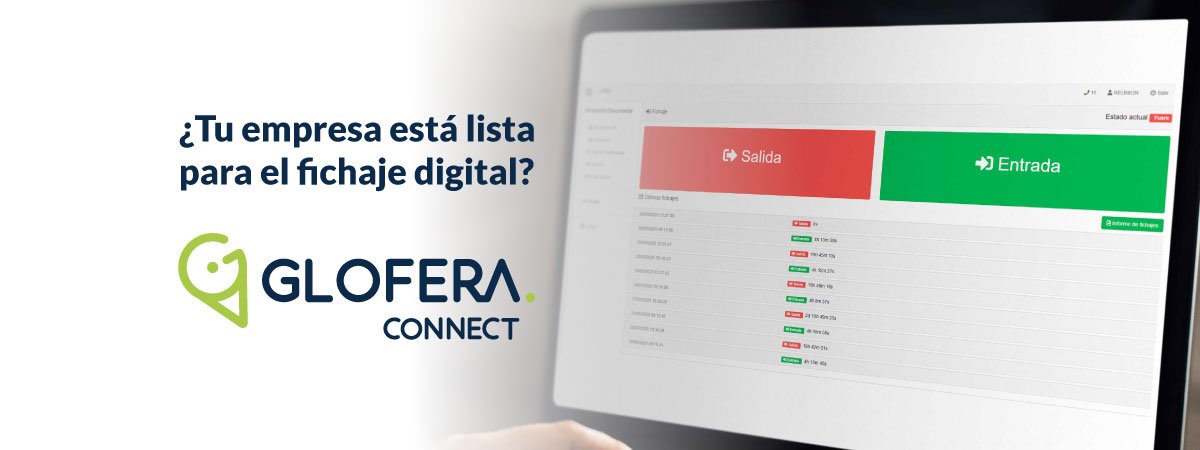
Mandatory digital signage: Is your company ready?
What if an error in timekeeping resulted in a fine? Mandatory digital clocking is no longer a distant possibility. The government is finalizing a draft bill that will directly affect how companies record their employees’ working hours. If you’re still using Excel templates or paper time sheets, it’s time to catch up.
In this article we tell you what digital clocking is, which companies will be obliged to implement it, what requirements must be met and when it will be mandatory. In addition, we explain how tools such as Glofera Connectour Virtual PBXcan help you digitize and centralize your personnel management, communication and clocking control in a simple and secure way.
What is digital signage?
Digital clocking is the method of electronically recording the start and end of each worker’s workday, as well as their breaks and overtime. This recording can be done through an app, a specific software, a time and attendance device or even through tools integrated in telephony or HR systems.
The key is that the system must guarantee the reliability, integrity and unalterability of the data, and also retain it for at least 4 years.
Which companies will be required to file digitally?
According to the Ministry of Labor’s preliminary draft, all companies (yes, all), regardless of their size or sector, will be required to implement a digital clocking system. This includes:
The record must be digital and meet traceability, access and storage criteria.
Characteristics and requirements of digital signing according to the government’s draft bill of exchange
The preliminary draft sets out a series of technical and organizational requirements that all companies must meet when implementing the digital clocking system:
When will digital clocking become mandatory?
Mandatory digital signing in Spain is still at the draft stage, but is expected to come into force in 2025, once the legislative process has been completed.
Regulations are advancing, and what was once a recommendation will soon become an obligation. Implementing a digital clocking system is not only compliance with the law: it is also an opportunity to improve organization, transparency and efficiency in your company.
At Glofera we help you stay one step ahead. Our Virtual PBXGlofera Connect, not only improves your company’s communication, but you and your employees could perform the digital clocking through our platform, to offer you a centralized, modern and 100% legal solution.
Meet HERE all the features of our Virtual PBX Glofera Connect
Do you want a free and personalized consultancy? call us at +34 900 600 300 or write to us at hola@glofera.com and we will help you choose the best solution for your company.
Related Posts