Why Customers Don’t Pick Up the Phone When You Call from a Landline
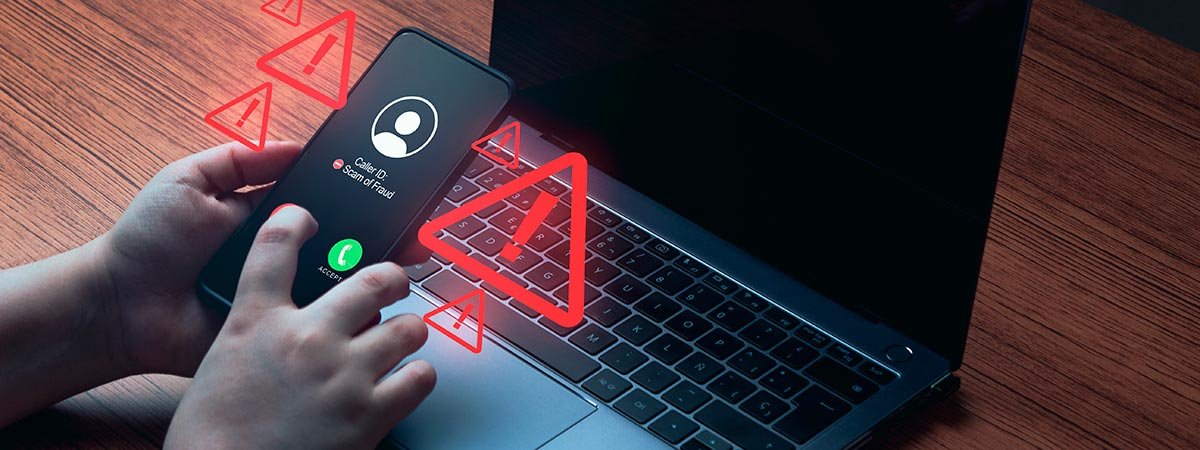
Your sales team calls and calls and calls—and more and more often, no one picks up. It’s not that your customers have suddenly become rude. It’s just that in recent years, people have learned—and rightly so—to be wary of numbers they don’t recognize. And a generic landline number, without clear identification, falls squarely into the “better not answer” category.
The problem isn’t your team; it’s your reliance on the number
Think about your own behavior: if an unknown number calls you, do you always answer it? Probably not. That same filter you apply is also being applied by your potential customer against your company. And the more annoying sales calls people receive in general, the stricter that filter becomes for everyone—including legitimate calls, like yours.
The regulations have also changed the rules of the game
A recent regulatory change has exacerbated this problem: sales calls can no longer be made indiscriminately from cell phones or from numbers that do not properly identify their commercial nature. This forces companies to rethink how they make their calls and to ensure that their phone numbers are properly configured and recognizable—not only for compliance purposes, but also because this is the only way to improve response rates going forward.
What Really Improves Reachability
- A fixed, real, and stable number—not a number that changes. If your company always calls from the same identifiable number, over time that number will become “recognizable”—both to caller ID apps and to your own repeat customers.
- Consistent geographic presence. A local area code from your region inspires more confidence than a number the customer doesn’t recognize. If you’re selling in Barcelona, a 93 says more than a number that looks like it could be from anywhere.
- Consistency: Always use the same outgoing number. If each sales representative calls from a different cell phone, the customer will never come to recognize the number. Centralizing outbound calls under the same company number builds that trust over time, call by call.
- Avoid making calls from personal cell phones for business purposes. In addition to being a regulatory issue, it’s also a matter of image: a reputable company calls from a business number, not from the personal cell phone of whoever is on duty that day.
This isn’t solved by insisting more; it’s solved by being recognizable.
When the response rate drops, it’s tempting to call more often and be more persistent. Always calling through the same channel doesn’t solve the underlying problem—in fact, it can make the calls seem even more like spam. What really makes a difference is having a consistent, recognizable number that’s aligned with your business, so that the next time you call, the customer already has a reason to pick up.
How to Tell If This Is Happening to You
If your sales team tells you that “it’s getting harder and harder to get people to answer,” it’s not just their perception. It’s a real market trend, and there’s a technical solution—it’s not just a matter of trying harder.
Request your free analysis and we’ll review how your outbound numbering is configured and what changes would improve your actual response rate. Learn more about why your team needs a phone system.

Frequently Asked Questions About Blocking Customer Calls
Why did they used to answer my calls, but now they answer them less and less?
Because there has been a widespread increase in mistrust of unknown numbers, and recent regulations on telemarketing calls have reinforced the need for companies to call from identifiable and consistent numbers.
Is it now mandatory to call from a number identified as belonging to a company?
Recent regulations on telemarketing calls restrict the use of personal cell phones for this purpose and require proper identification of the caller’s origin. It is advisable to review your company’s specific situation to confirm exactly what applies to your business.
If I change my phone number, will I lose the recognition I already had?
It depends. If your current number is working well and is stable, there’s no need to change it—the goal is for it to be consistent and properly configured, not necessarily to replace it.
Does a number with a local area code really make a difference?
Yes, in a measurable way. Studies of calling behavior show that people are more likely to answer calls from numbers with a recognizable area code than from numbers they don’t recognize.
How long does it take to see an improvement in the response rate?
The improvement is gradual: the more consistent the number from which the call is made, the faster it begins to be “recognized,” both by caller ID apps and by repeat customers themselves.
Does this apply only to sales calls, or does it also apply to customer service?
This mainly affects outbound sales calls, which is where mistrust is most prevalent. Inbound customer service calls do not have this problem, since it is the customer who is calling.
Related Posts